In the rapidly evolving world of digital marketing, eBizUniverse recognizes the significant impact of first impressions. With Siteefy reporting about 1.13 billion websites on the Internet, roughly 200 million of them actively in operation, standing out is challenging. The initial moments can either secure a visitor to your site or let them loose into the vast sea of alternatives. The ‘above the fold’ (ATF) content is a crucial factor that can tilt this balance to your advantage. It serves as your digital handshake, setting the stage for all interactions.
What is Above-the-Fold Content?

As we navigate the world of digital marketing and web design, it’s crucial to understand key terms that shape how we approach our online presence. One such term is ‘above the fold’ content, a concept that plays a vital role in user engagement and website performance. But before we delve into its significance in the digital space, let’s take a step back and explore where this term originally comes from.
Origins in Print Journalism
If you’re new to digital marketing or web design, you might ask yourself, “What exactly is ‘above the fold’ content?” The term ‘above the fold’ may sound like jargon, but its roots are far from the Internet world. It originates from the traditional newspaper industry.

During the heyday of print journalism, newspapers were often displayed folded up on newsstands, with only the top half of the front page visible to passersby. Editors quickly realized they had to capture potential readers’ attention immediately, so they placed the most captivating news stories and eye-catching headlines ‘above the fold.’ This ensured that the first thing a potential reader saw was something that piqued their interest enough to pick up the newspaper and read more.
Adapting the Concept to the Digital Age
Fast forward to the digital age, and the concept of ‘above the fold’ has been adapted to web design and digital marketing. In this context, ‘above the fold’ refers to the content visitors see on your website before scrolling down. This could be on any landing page, product page, blog post, or homepage. Just like with newspapers, the goal of the ATF content is to capture the visitor’s attention immediately.
The Importance of ATF Content in Digital Marketing
Above-the-fold (ATF) content — the content that is immediately visible on a webpage without scrolling — holds immense significance. It’s your golden opportunity to attract and retain your visitor’s attention and make a strong, lasting first impression.
In this rapidly evolving digital era where user attention spans are dwindling, having engaging and relevant ATF content can make or break a visitor’s decision to stay on your site or click away. Any digital marketer or web designer must understand and effectively leverage ‘above the fold’ content.
The importance of ATF content lies in its ability to:
- Captivate your audience
- Convey key messages immediately
- Encourage exploration of the rest of your website
Research conducted by Nielsen Norman Group reveals the depth of this importance. Their studies found that users dedicate about 57% of their viewing time to the content above the fold. This means that visitors focus over half their time on the initial content they see upon landing on your site. This placement presents a priceless opportunity to engage your audience and guide them deeper into your website.
Examples of Effective Above the Fold Content
- Apple masterfully uses above-the-fold content to showcase its latest product with a high-resolution image, compelling tagline, and clear CTA, communicating its offering instantly.
- Netflix employs above-the-fold content effectively with striking visuals from their latest TV shows and movies, a persuasive tagline, and a bold ‘Get Started’ CTA, quickly expressing its value proposition.
- Airbnb excellently utilizes above-the-fold content by displaying captivating images of unique accommodations and an easily accessible search bar, enticing visitors to start their journey.
How to Optimize Your Above the Fold Content

Optimizing your above the fold content is a delicate balancing act between aesthetics and functionality. It involves not just what content you present but also how quickly it loads, looks on different devices, and how accessible it is for all users. Here are some key points to consider when optimizing above the fold content:
Engaging Visuals
High-quality images, videos, or animations can instantly grab visitors’ attention. However, remember that these visuals should be relevant to your content and resonate with your target audience.
Clear Value Proposition
Your above the fold content should clearly communicate what you offer and why it matters to the visitor. This could be a compelling headline or a concise summary of your services or products.
Simplicity and Clarity
While providing enough information to engage the visitor is essential, avoid overcrowding the space with too much text or elements. A clear headline, a succinct description of your services or products, and a solid Call to Action (CTA) can effectively convey your message without overwhelming the visitor.
Mobile Optimization
In our mobile-first world, your content must look great and function well on all devices. This means ensuring your images, text, and other elements scale well on different screen sizes. Remember, a significant portion of your traffic will likely come from mobile users, so neglecting this aspect can considerably impact user engagement.
Load Time
The speed at which your above the fold content loads is critical. Slow-loading content can frustrate users and lead them to leave your website. Optimize your images and other media to ensure they load quickly, even on slower internet connections.
Utilization of Empty Space
Empty space, or white space, isn’t wasted space. When used strategically, it can help highlight your key content and make your site more readable and visually appealing. It provides breathing room for your visitors’ eyes and helps guide them through your content.
Accessibility Guidelines
Finally, in your quest to create engaging above, fold content, don’t forget about accessibility. Ensure your website is accessible to all users, including those with disabilities. This could involve using larger fonts, providing alt text for images, and ensuring your site is navigable using a keyboard.
Optimize Your Above-the-Fold with eBizUniverse Today!
The Power of Split Testing
Perfecting your above the fold content isn’t a one-and-done deal. It’s a continual improvement process, and split testing (or A/B testing) is a powerful tool. This involves creating two versions of a webpage with different above-the-fold content, then showing each version to a portion of your visitors to see which performs better. Analyzing the results allows you to make data-driven decisions on optimizing your above-the-fold content for maximum impact.
The Role of Above the Fold Content in Your Overall Marketing Strategy
Above-the-fold content doesn’t just influence first impressions—it’s a pivotal part of your overall marketing strategy. It impacts SEO as search engines like Google consider user behavior when ranking websites. Engaging above-the-fold content can increase dwell time, lower bounce rates, and improve search engine rankings. It also boosts conversion rates by quickly engaging visitors and prompting them to take action.
The Benefits of an SEO Audit
An SEO audit is a vital tool in the digital marketer’s arsenal, comprehensively analyzing a website’s performance in search engine rankings. This process is not just about identifying how your content performs—it’s about understanding the overall health of your website and improving its effectiveness.

Choosing a trusted digital solutions provider like eBizUniverse for conducting an SEO audit offers numerous advantages:
- Uncovering Weak Points: An SEO audit can help you discover areas of your website that need improvement for better visibility and engagement, including the all-important first impression content.
- Competitive Insights: The audit process often includes comparing your website to others in your industry. This gives you a clear picture of where you stand and what elements you could improve or innovate.
- Enhancing User Experience: Optimizing your website based on SEO audit results can significantly improve the user experience, leading to higher visitor retention and conversion rates.
- Refining Your Strategy: The valuable insights from an SEO audit allow you to refine your digital marketing strategy. It provides actionable data about your content’s performance and the changes needed to boost it.
An SEO audit brings everything together, providing a holistic view of your website’s performance. It’s not just about refining your initial impression content but ensuring that every aspect of your site is optimized for success. By partnering with eBizUniverse, you can achieve seamless and effective audits that drive better results and a stronger online presence.
Final Thoughts
The above-the-fold content is much more than just the first thing visitors see—it sets the tone for their entire visit, impacts your SEO, and significantly influences conversion rates. It’s your digital shop window—a missed opportunity if ignored.
Ready to make the most of your above the fold content? Let us at eBizUniverse help! We specialize in crafting compelling digital experiences that drive results.
Contact us today at 1-800-379-2829, and let’s create a powerful first impression together!





In August, Google announced a new big search ranking algorithm update, named the helpful content update – probably its biggest update in a decade.
What We Know
The helpful content update will target websites with a relatively high amount of unsatisfying or unhelpful content, where the content has been written explicitly for search engines to leverage rankings.
Unlike many Google algorithms that get applied page-by-page, this new helpful content update will be sitewide. That means that if Google determines your site is producing a relatively high amount of unhelpful content, it will impact your whole site.
This reminds us of the early Panda and Penguin update days. Just as a quick reminder – or in case you weren’t working in SEO a decade ago – those updates did a lot of damage back then, and we made significant changes to our SEO strategies to recover and protect our client websites.
Which Sites Were Likely Impacted?
According to Google, this update impacted these types of content the most:
- Online educational materials.
- Arts and entertainment.
- Tech-related.
This is because content written in those areas has historically been written more for search engines than humans.
These are the folks that were hit the hardest:
- Publishers focused on a broad range of topics like CNET, Forbes, etc.
- Sites that collect and monetize organic search traffic without providing unique value.
- Sites that have content created with AI tools like Jasper or Copymatic.
- Sites with SEO doorway pages created for the sole purpose of boosting rankings.
- Sites with spammy content with a very high keyword density.
Our Observations:
We were quick to run a deep ranking audit of more than 3.5K websites, and we are happy to inform you that so far, this update did not have any significant negative impact on our client’s websites. In fact, we have seen good improvement in positions for the sites we are working on. This implies that our content strategy, in conjunction with our other SEO efforts like on-page optimization and link building, is working well and protecting our client’s websites.
Are your GBP posts getting rejected? Well, that’s because GBP has added more restrictions to its list of guidelines. As stated in their support document under the “Avoid Spam” header, Google warns business owners to avoid uploading duplicate photos, posts, videos, or logos.
Here’s a screenshot of the other guidelines that you should know.

So, using original images & relevant content is the only way to get your posts accepted.
Need help? Get in touch with our technical support team for assistance.
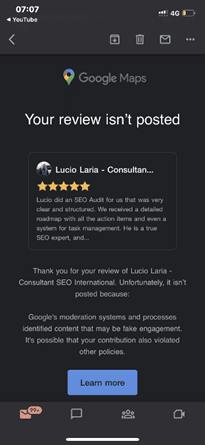
Recently, it has been discovered that Google Maps is emailing customers who have posted a review for any business when their review is flagged as fake and, therefore, not posted.
It came to light after Lucio Laria – Consultant SEO International raised this issue on the Google Business Profile community. When a help forum titled Legitimate review started getting flagged as “Fake Engagement”, he wrote:
Hello,
I just settled my Google profile and asked my client for a review. Google is filing this review as a fake engagement when this person is a legitimate client of mine.
I’m waiting for this to be fixed before asking other of my clients for their reviews.
Why is this happening, and how can I fix it?
Thanks,
Among the many conjectured reasons and suggestions put forth by knowledgeable forum members are the following:
- It may be related to the review content. See Prohibited and restricted content. Ask the reviewer to delete it and then write a new review.
- It may be due to a problem with the reviewer’s account.
- Because the provider is in France and the client is in Argentina, the distance between them could be the reason.
- Ask the reviewer to try again, leaving a 4-5 sentence review, and add specifics about the services provided and, if pertinent, the location at which they were provided. If that fails, ask them to leave a review from another account.
The reviewer received the email notification about 15 minutes after posting the review. As the forum community pointed out, the review was being “filtered by an algorithm that enforces Google’s content policies”.
Why You Should Pay Attention to This Issue:
As we all know, getting legitimate reviews is not an easy task. It takes a lot of effort to impress a client and even more to convince the client to post a good review. It is disappointing when our sometimes hard-to-get legitimate reviews get taken down for “algorithmic” reasons, as requesting the client to post it again can be a bit awkward.
So, it’s crucial to learn how to get our good reviews to stick the better we can prep our customers and clients to get it right the first time.
Are you getting the best return out of your digital marketing?
Need an extra pair of eyes to review your online game plan? Let our experts take a look at your current state and do a comprehensive
digital marketing analysis at no cost to you. Please call us at
(800) 379-2829 or
contact us today and we will get to work right away.




Google updates its algorithm frequently. At times, they announce the major updates beforehand, and at times they inform after initiating one. The last update was rolled out on May 25th, and to learn about such updates, we had to wait for tweets & official answers from the team.
Google thought of improving this process and has created a dedicated Google Search ranking updates page. With the help of this page, you can check all the latest and previous updates easily.

If you wish to learn how Google improves the search engine, there are several articles from Google to help you. Also, its blog page has more information related to the updates. This page is definitely important for all site owners and SEO experts.
Need more details? Reach out to our support team for assistance.
To help businesses grow their eCommerce site, Google developer advocate Alan Kent recently hosted a video that outlines “8 tips” for SEO-optimizing an eCommerce site.
Here are the 8 tips that Alan believes will help you:
Tip 1: Make sure you have the technical basics in place – You need to ensure your URLs and internal links are friendly to crawlers.
Check out Designing a URL structure for E-Commerce Websites on Google Search Central for advice on how to design URLs for your website.
Tip 2: Create content relevant to users at different stages in their shopping journey – To check the breadth and quality of your site, think about likely searches by shoppers at different stages in their shopping journey. Once you have a set of queries, try them out. Does your site come up well-positioned? What about your competitors?
Tip 3: Be sure to mark up your product variant pages correctly – Product variants are when you have multiple colors or sizes of the same product. Informing Google of the relationship between the product pages can help Google better understand your site content.
The URL Inspection tool can also be used to check the status of individual pages.
Tip 4: For sales events that occur regularly, use the same URL across all event occurrences – This can help Google understand and trust the purpose of such pages. To identify problems, check the URL for promotional event pages on your site.
Tip 5: The “performance” of your web pages matters – Performance is important to users as a page that takes too long to load may be abandoned by them. It is also an important Google ranking signal. It can be particularly important if you use the same supplier-provided product description as other sellers online. The PageSpeed Insights report is useful for checking the performance of the web page.
Tip 6: Wait for it – Be patient to see the results. SEO, unfortunately, is a long game. Some ranking signals may take months to change. Worse, there is no guarantee of success. While it may take months to reap the benefits of a content creation strategy, it does not mean there is nothing you can do until then.
Tip 7: Seek professional help for your website – If you have done your best to improve your site but are still not getting the results you want, we’re here to provide expert SEO advice.
Tip 8: It’s all about the user – The ultimate goal for Google Search is to put the best possible content in front of the users. Algorithms change over time, but the ultimate goal does not. It does not mean you should not measure your site’s performance. It is still recommended to use tools such as Google Search Console and Google Analytics to collect data on your site.
Here is just one of our success stories that shows the importance of SEO! Ready to be our next success story?
As known to most SEO experts out there, Google renamed Google My Business to Google Business Profile last year while also rolling out more support for managing a business profile.
Going a step further, the search engine giant has now launched another feature that is bound to give small businesses operating out of homes a reason to be happy.
Google Business Profile now features a toggle that will allow businesses to hide their business address from customers if they wish to do so.

The screenshot above shows the businesses can now toggle ‘Show business address to customers’ on and off.
Why Is This Important?
This recently launched support feature is perfect for entrepreneurs operating virtual businesses that aren’t tied to a physical location. It can also prove to be quite helpful for all those home-based service operators who wish to avoid customers visiting.
Are you getting the best return out of your digital marketing?
Need an extra pair of eyes to review your online game plan? Let our experts take a look at your current state and do a comprehensive
digital marketing analysis at no cost to you. Please call us at
(800) 379-2829 or
contact us today and we will get to work right away.




Local SEO strategy refers to the overarching strategy or process used to optimize your site content and online presence for higher rankings. Local SEO strategy focuses on improving business rankings in local search engine results pages (SERPs).
The difference between traditional SEO and local SEO is local SEO focuses your efforts on attracting customers near your physical location — and getting them through your door, while traditional SEO boosts your visibility on a wider scale.
The main benefit of local SEO is that it lets you take advantage of increased visibility in your immediate area.
How does it work?
Google uses numerous factors when ranking local content, but it predominantly focuses on these three signals:
- Relevance: Does your business listing match the searcher’s intent?
- Distance: How close is your business to the searcher at the time of the search?
- Prominence: Is your business well-known both online and offline?
When a user conducts a search using a location or “near me” and your business listing best matches the query, you’ll appear in Google’s local SEO 3-pack — a listing of the top three local businesses that meet the search criteria.
12 local SEO strategy tips to boost rankings and revenue:
- Optimize your local listings and citations
- Understand your local personas
- Conduct local keyword research
- Earn backlinks from local sources
- Write in-depth, local content
- Optimize your title tags and meta descriptions with local keywords
- Include an internal linking structure for location pages
- Update your website
- Improve your UX
- Post local content on social media
- Earn reviews from happy customers
- Track the results of your local SEO strategy
In true Google fashion, the search engine giant has now come up with an update for its rich results guidelines. These updated guidelines are meant to better align the rich results content with the overall Google merchant guidelines.
The new guidelines deny rich results for products that are widely prohibited and are known to facilitate harm in any way to anyone. For example, products that fall into categories like weapons, fireworks, recreational drugs, tobacco, gambling, etc.
The guidelines now have an additional section
Google rich results content guidelines, which have already come into effect, have been updated to add the following section:
“Don’t mark up content that promotes widely prohibited or regulated goods, services, or information that may facilitate serious and/or immediate or long-term harm to self or others. This includes content related to firearms & weapons, recreational drugs, tobacco & vaping products and gambling-related products.”
The new policy applies to all forms of markup
According to Google, the new guideline policies will apply to rich result markups in all forms, be it star ratings, prices, information regarding a product’s availability or other such factors. This, in turn, will impact the prohibited products’ structured data markup.
How does this affect your business?
If you are into the business of selling products that fall into any of the above-mentioned prohibited categories, this update definitely applies to you. All you can do right now is remove the structured data markup from your product pages because Google will not show rich results for them.
Although the search engine will not issue any manual action, the removal of rich results in itself will act as a penalty against violating the rich results content guidelines.
For years, Google’s SERPs have been including knowledge panels so users can find the required results quickly. In this article, we’ll discuss how knowledge panels are created and how they work.
Introduction To Knowledge Panels
Knowledge panels/entity boxes are information boxes that appear on Google’s search results page when you search for specific content. The main aim of these boxes is to provide users with the information they need in brief. The content you search for (for example – people, places, organizations, things) should be present in knowledge graphs to appear in knowledge panels.
Only limited categories or entity types (books and book series, educational institutions, government, local shops, companies, events, movies & film series, music groups & albums, and more) are considered for the knowledge graph. Also, only the most relevant or popular entities of every category are included in the knowledge graph.
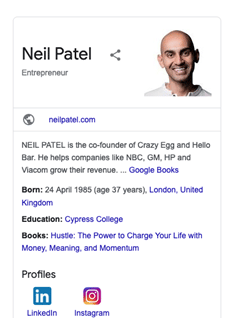
Knowledge panels are different from business boxes, as the latter is based on Google Business. The best way to spot a classic knowledge panel is by looking for a share button in the upper area of the panel. Also, the entity type is specified below the name & depending on the category, various attributes are assigned & the available content is filled.
The image below is an example of a classic knowledge panel. Google prefers using different templates for various entities.
How Are Entities Selected For A Knowledge Panel?
Google has not given any criteria or procedure to select an entity for a specific category. But we have listed some of the most possible ways that Google uses to create a knowledge panel. Several websites that provide semi-structured data, for example – Wikipedia and Soundcloud, can be used by Google to select relevant entities for each category.
How Are Knowledge Panels Created?
In the Google patent, you can learn more about the basic methodology related to knowledge panels. The steps given below describe the basic process followed to create a knowledge panel:
- Finding relevant entities in the query
- Shortlisting relevant sources
- Creating the most appropriate search results
- Cross-checking whether the search query refers to the actual entity
- Determining an entity type/category for the entity requested
- Finalizing a suitable template for the panel (which should match the entity type)
- Arranging relevant content elements for the main entity from a trusted source
- Referring to another trusted source for content elements
- Attaching placeholders in the selected panel template with the finalized content elements
- Merging search results and knowledge panel on one SERP
How Are Images Selected For A Knowledge Panel?
The Google patent describes how images are selected for various entity types and incorporated into the knowledge panel. The steps given below are a shorter version of the same.
- Most relevant images are selected
- Cluster by similarity
- Most popular clusters are identified and separated
- Image format (portrait or not) is determined
- A portrait score is assigned
- The most representative image is selected
- The image is attached to the knowledge panel
The clustering of images into various categories depends on the proximity to the entity as well as the aspect ratio. We can also determine the possible categories by looking at Image Search.

In Google’s patent related to images, the images are labelled with attributes and are assigned to specific entities. These attributes are primarily determined by considering the initial image. Additional attributes can also be added by referring to similar images. It is believed that Google selects relevant images by using data from popular sites (Wikidata, Wikipedia, Wikimedia, social media profiles, magazines, and more).
Reasons Why Knowledge Graph Is Gaining Importance
The SERP features are gaining more importance every year, so it’s expected that the Knowledge Graph will also follow the trend. Since the entities are at the center of the Knowledge Graph, it will definitely affect the rankings and overall search results. To conclude, SEOs should not miss out on the Knowledge Graph when preparing their SEO strategies.
Are you getting the best return out of your digital marketing?
Need an extra pair of eyes to review your online game plan? Let our experts take a look at your current state and do a comprehensive
digital marketing analysis at no cost to you. Please call us at
(800) 379-2829 or
contact us today and we will get to work right away.




As we all know, Google launches core updates at least two to three times a year. These updates cause a hassle to all the web developers and SEO specialists because they have to monitor the rankings and make the required changes.
On May 25th, Google announced an update via a tweet.
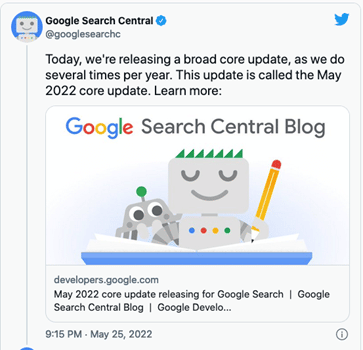
This core update was further explained on Google Search Central. According to this article, Google makes changes to the ranking process to increase the accuracy of the search results. These improvements are called core updates. The core updates are not specific to certain sites but will certainly generate notable effects. Some sites’ ranking may drop, while others may rank better.
Also, Google said that if any site does experience a drop in its ranking, they don’t have to fix anything. These updates are meant to improve the system, helping under-ranked sites to get better traffic.
So, if your ranking suddenly drops, there’s nothing to worry about. You have not violated any webmaster guidelines. You just have to sit back and wait for the next core update. One last thing you can do is observe the sites that have ranked higher and try to figure out the factors that helped them.
Still have any issues? You can get in touch with our experienced team for assistance.
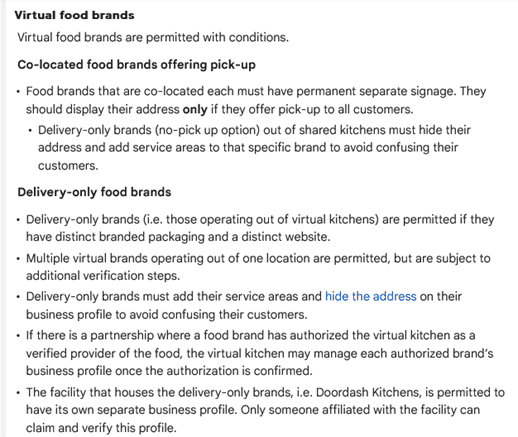
Last month Google laid out new, more specific guidelines to help the virtual food brands and delivery-only businesses with their Business Profiles on Google. These guidelines are meant for food businesses that don’t really have a physical location in an area, but they do re-package and deliver the local restaurants’ food.
The guidelines can be found in Google’s Guidelines for representing your business on Google, under the section Guidelines for chains, departments & individual practitioners.
Here’s a look at what these new guidelines have to say:
Final Takeaway
If you own a virtual food business, it is in your best interest to take a look at the new guidelines so that you can create a business profile on Google that isn’t suspended.
Recently Google’s Dikla Cohen gave a presentation on video indexing, which explains that video indexing does not rely on where and how you host your videos. You can host them yourself or choose from the most popular video hosting platforms and services.
With this, he announced Google is soon launching a new set of reports and tools in Search Console to make video indexing easier to track and diagnose.
With this new launch, the Video Page Indexing report will show a summary of all the pages that Google’s systems find with a video while crawling and indexing your website. At a glance, you can see how many video landing pages were indexed.
Issues will be grouped with a trend line and counts of the affected videos. For example, which videos are missing a thumbnail URL, with reasons – the largest impact ranked on top.
You can click on one of the rows to get more details, such as affected video page URLs. You can also download the list of examples and double-check them. So, you can narrow down the details and understand what is happening and how to resolve issues.
Once your website is updated; and you think you have resolved the issue you were facing, you can go back to the Video Indexing Report, go to that specific issue type, and then use the validate fix button to inform Google.
This way, you can initiate the recrawling of known URLs affected by the issue. And as the pages are being reprocessed, you will be notified if everything is resolved or if there are remaining issues.
But you will have to note that it can take some time to go through all the URLs.
If you wish to check the video indexing status, you can get there by entering the URL of the video landing page at the top of the search console. It will first show you the current status of that URL, as well as the video index status of the page. It will inform you whether Google detects a video on the page. And, if so, did they manage to index it. If a detected video is not indexed, it will list the reasons preventing it from being indexed.
Also, please note that Google indexes only one video per page, even when a page has multiple videos.
To summarize, with the new tools,
- You will be able to see how many video landing pages Google has discovered and how many of them were indexed.
- Examine reasons for unindexed videos on video landing pages.
- You can use the list of affected video page URLs to debug and fix issues.
- You can use the Validate Fix button to initiate recrawling of the known URLs affected by the issue.
- You will be able to check the video indexing status of a specific video using the URL inspection tool.
Are you getting the best return out of your digital marketing?
Need an extra pair of eyes to review your online game plan? Let our experts take a look at your current state and do a comprehensive
digital marketing analysis at no cost to you. Please call us at
(800) 379-2829 or
contact us today and we will get to work right away.




In a new move, Google has announced the use of the AI approach to update the operation hours for over 20 million businesses around the globe in the next six months. Also, Google’s AI algorithms are busy figuring out if your posted business hours are accurate.
Google said, “We developed a machine learning model that automatically identifies if business hours are likely wrong, then instantly updates them with AI-generated predictions.”
How Does It Work?
The AI considers multiple factors, such as:
- The last time you updated your hours
- What they know about other shops’ hours
- The Popular Times information for your shop determined by location trends
Then, the algorithm analyzes the business hours of other similar shops that are nearby, information from the shop’s website, and Street View images of the shop’s storefront. Also, they will look specifically for business hour signs to determine the most accurate business hour prediction.
Google will take the help of the Google Maps community — including Local Guides and even the business owners themselves through their Google Business Profile — to verify the information they have predicted.
What Do You Need To Do?
All the business owners located in Argentina, Australia, Chile, France, Japan, Mexico, New Zealand, Peru, or the United States, should prepare their staff to expect inquiry calls powered by Google’s conversational AI asking about their business hours.
Also, check Google Maps from time to time to ensure that Google has correctly listed the timings, in case they have been changed without your input.
Google performing random display testings are no longer surprising. This time around, it is Google Maps testing the position of local listing previews.
Recently, one of the users noticed that when a specific listing is clicked on from the Google Maps search results that appear on the left-hand side, the local listing pops up in a new position.
Instead of its original position on the left bar, the local listing preview now hovers in a new position, overlayed on top of the map. So far, this new position testing seems to be limited to the Google Maps interface for the desktop.
Here’s a look at the local listing overlay box:

Normally, there would be no overlay box hovering over the map, and the local listing details would appear in the left bar, pushing the search results to the bottom footer.
We have highlighted the main steps involved in setting up an e-commerce site & depending on the work required in each step you can determine the price of the project.
Step One –
- Calculate the time required to set up a WordPress site, install plugins, install a WordPress theme, and meet a client’s requirements.
Step Two –
- Calculate the time you need to finalize images. Mostly, it depends on whether you are –
- Using existing images
- Making new images
- Modifying manufacturer’s images
Step Three –
- Determine the number of products or SKUs included in the project.
- Also, make a note of whether you will take the content from an old site, create your own new content, or reword the manufacturer’s website content.
- Lastly, you need to know if you must create custom category pages and the amount of product information that will be provided.
Step Four –
- Customizing a plugin may need about 20-30 mins, so extra features like Shipping Plugins, Invoicing Plugins, & more should be noted down.
After you have a good idea of the level of work required, you can give an estimated price range for the project. If the estimate is approved by the client, you can charge by the hour to ensure you are paid for your work.
Have any questions? Get in touch with our experts for assistance.
Are you getting the best return out of your digital marketing?
Need an extra pair of eyes to review your online game plan? Let our experts take a look at your current state and do a comprehensive
digital marketing analysis at no cost to you. Please call us at
(800) 379-2829 or
contact us today and we will get to work right away.




In a shocking move for SEO experts, Google Analytics 3 will stop collecting new data July 1, 2023 onwards.
Google posted a notice on Google Analytics stating, “Two and a half years ago, we introduced Google Analytics 4 to address these evolving measurement standards and help businesses succeed. Google Analytics 4 has the flexibility to measure many different kinds of data, delivering a strong analytics experience that’s designed for the future.
It allows businesses to see unified user journeys across their websites and apps, use Google’s machine learning technology to the surface and predict new insights, and most importantly, it’s built to keep up with a changing ecosystem.”
Explaining the difference between Google Analytics 3 and Google Analytics 4, Google says, “GA3 was built for a generation of online measurement that was anchored in the desktop web, independent sessions and more easily observable data from cookies. However, this measurement methodology “is quickly becoming obsolete.
While GA4 operates across platforms, does not rely exclusively on cookies and uses an event-based data model to deliver user-centric measurement.”
Further, Google says GA4 is advanced in terms of privacy as it provides more comprehensive and granular controls for data collection and usage — and it does not store IP addresses, a necessary adjustment required by data privacy regulations in many locations.
Google promises that GA4 will better support your business by helping you:
Understand your customers across touch points – Get a complete view of the customer lifecycle with an event-based measurement model that isn’t fragmented by platform or organized into independent sessions.
- Improve ROI with data-driven attribution – Use data-driven attribution to analyze the full impact of your marketing across the customer journey.
- Measure engagement and conversions – With business and compliance needs in mind. With GA4, you’ll have country-level privacy controls that enable you to manage and minimize the collection of user-level data — like cookies and metadata — while preserving key measurement functionality.
- Get greater value from your data – With predictive insights about user behavior and conversions generated by machine learning.
- Easily activate your insights – With expanded integrations with other Google products — like Google Ads — making it easier to optimize your campaigns.
What to do now:
From July 1, 2023, all standard Universal Analytics properties will stop processing new hits, and from October 1, 2023, 360 Universal Analytics properties will do the same. After that, you can access your previously processed data in Universal Analytics for at least six months.
If you want to build the necessary historical data before Universal Analytics stops processing new hits, you need to move to Google Analytics 4 as soon as possible.
The recently updated Google Business Profile Help document states that you may now have to verify your Google Business Profile through “more than one method”.
Here’s a look at exactly what the updated document says.
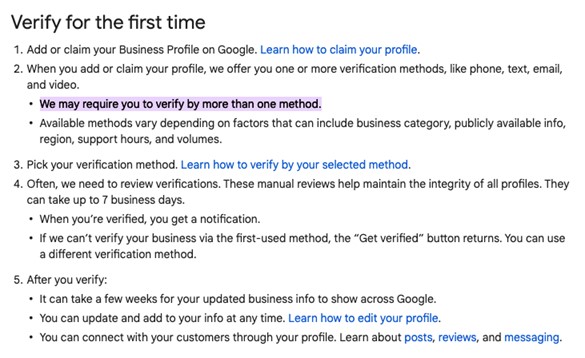
It looks like Google rolled out this update, apart from pushing for video verification, to hopefully tackle one of the persisting problems – fake locations on Google Maps.
Check out this video to better understand the steps to getting your business verified on Google.
Final Takeaway
There’s really no way you can build a strong online presence without getting your business verified on the search engine giant. Click here for more information on Google Business Profile verification and all the options available to you.
Google has now allowed all U.S. auto advertisers to advertise their vehicles on its page. Customers shopping for vehicles online will now be able to see vehicle details such as make, model, price, mileage, and advertiser name. The latest format of the advertisement is given below. When a customer clicks on the ad, it directs the customer to the vehicle description page.

Advantages Of Vehicle Ads:
- Vehicle ads are designed to help you reach your potential customers easily.
- Advertisers can now optimize their site accordingly to get a good conversion rate (both online and offline).
- Users will only see the most relevant listings from your inventory, helping you get qualified leads.
What You Need To Know:
- Both new & used vehicles can be advertised
- Only non-commercial vehicles can be advertised
- Only available for U.S. auto advertisers
How To Get Started
Are you getting the best return out of your digital marketing?
Need an extra pair of eyes to review your online game plan? Let our experts take a look at your current state and do a comprehensive
digital marketing analysis at no cost to you. Please call us at
(800) 379-2829 or
contact us today and we will get to work right away.




Want to become an expert on how to use SEO when designing your website? Read on to discover top 12 guidelines for SEO-friendly website design.
- MAKE SURE YOUR SITE NAVIGATION IS SEARCH ENGINE FRIENDLY
Using Flash for navigation on your website can be bad news if you aren’t aware of how to make Flash objects accessible and web-crawler-friendly. Search engines have a really tough time crawling a website that uses Flash. CSS and unobtrusive JavaScript can provide almost any of the fancy effects you are looking for without sacrificing your search engine rankings.
- PLACE SCRIPTS OUTSIDE OF THE HTML DOCUMENT
When you are coding your website, make sure you externalize JavaScript and CSS. Search engines view a website through what’s contained in the HTML document. JavaScript and CSS, if not externalized, can add several additional lines of code in your HTML documents that, in most cases, will be ahead of the actual content and might make crawling them slower. Search engines like to get to the content of a website as quickly as possible.
- USE CONTENT THAT SEARCH ENGINE SPIDERS CAN READ
Content is the life force of a website, and it is what the search engines feed on. When designing a website, makes sure you take into account good structure for content (headings, paragraphs, and links). Sites with very little content tend to struggle in the search results and, in most cases, this can be avoided if there is proper planning in the design stages.
- DESIGN YOUR URLS FOR SEARCH FRIENDLINESS
Search friendly URLs are not URLs that are hard to crawl, such as query strings. The best URLs contain keywords that help describe the content of the page. For example, think about the following URLs for an HVAC website:
hvacompany.com/services/repairs/
hvacompany.com/services/residential-repairs/
hvacompany.com/services/commercial-repairs/
- BLOCK PAGES YOU DON’T WANT SEARCH ENGINES INDEX
There could be pages on your site that you don’t want search engines to index. These pages could be pages that add no value to your content, such as server-side scripts. These web pages could even be pages you are using to test your designs as you are building the new website. Don’t expose these web pages to web robots. You could run into duplicate content issues with search engines as well as dilute your real content’s density, and these things could have a negative effect on your website’s search positions.
- DON’T NEGLECT IMAGE ALT ATTRIBUTES
Make sure that all of your image alt attributes are descriptive. Search engines will read alt attributes and may take them into consideration when determining the relevancy of the page to the keywords a searcher queries.
- UPDATE PAGES WITH FRESH CONTENT
If your website has a blog, you may want to consider making room for some excerpts of the latest posts to be placed on all of your web pages. Search engines love to see content of web pages changing from time to time as it indicates that the site is still alive and well. With changing content, comes greater crawling frequency by search engines as well.
- USE UNIQUE META DATA
Page titles and descriptions should all be different. Many times, web designers will create a template for a website and forget to change out the meta data, and what ends up happening is that several pages will use the original placeholder information. The Best Web Design Companies know that every page should have its own set of meta data; it is just one of the things that helps search engines get a better grasp of how the structure of the website is constructed.
- USE HEADING TAGS PROPERLY
Make good use of heading tags in your web page content; they provide search engines with information on the structure of the HTML document, and they often place higher value on these tags relative to other text on the web page.
- INCREASE INTERNAL LINKING ON YOUR WEBSITE
Internal linking can boost the rankings of your website when used correctly. It helps Google understand your content better and also sets an informational hierarchy for your website. Websites with information are consistently correlated with each other. It is very helpful for people and search engine bots when relevant information leads them to further information on the subject.
- MAKE YOUR WEBSITE MOBILE-FRIENDLY
Whenever a query is entered in the search bar, Google will rank websites based on several different factors, but mobile-friendliness is be one of the primary factors. Thus, Google requires webmasters and businesses to create a mobile friendly website.
- IMPROVE YOUR PAGE SPEED
Nobody has the patience to tolerate a loading website nowadays. With so many options available at our fingertips, people swiftly switch from one site to another to look for the desired products or services. Thus, you’ll lose the potential rankings and leads if your site’s speed is low.
Need help with website design? Get in touch with our team for expert advice.
Website redesign is complicated. Here are some steps to take away before, during, and post-launch to avoid an SEO disaster when redesigning your site.
- Take inventory of your current site
Before changing anything, you need to take a snapshot of what your site and ranks look like currently. This will be a necessary reference point post-launch when evaluating if everything is indexing and ranking as it should.
Some areas to keep in mind while taking inventory of your site are:
- Current SEO rank: Check the current rankings of each of your website and also make note of the pages that currently rank in Google.
- Crawl your current site: This will let you see what your current site looks like and grab the structure, current URLs, meta description, and titles tags so you can match your new site up to the old.
- Blocked content: Verify any blocked content with your Robots.txt and/or Google Search Console. It is good to check this list so that you can make sure that these blocked pages continue to be blocked after the redesign.
- Keep content as close to the same as possible
We all know the saying, “If it ain’t broke, don’t fix it,” but that doesn’t mean you can’t change a page.
You just need to make sure your development and copy teams know when and what tags need to stay the same. Yes, during a redesign, you may need to make some changes to copy/content, but make sure the changes are small and deliberate.
In order to maintain your current rank, you should aim to keep the title tag, meta description, URL, and the H1 – H6 the same.
These areas are the most commonly crawled and are most important for pages that already rank on Google.
- Preserve some of the overall site architecture
Yes, some of the ways you organize your navigation and files may change based on your new website strategy and goals, but if possible, try to keep as much of the structure the same as you can.
Search engines already know your current site architecture, so by maintaining it, you give yourself a better chance of not affecting your rank.
Keep your existing visitors in mind as well, you don’t want to change your structure and confuse your existing audience when they revisit your website.
- Create 301 redirects
You also want to make sure you don’t want to remove any pages that are doing well. If you must, make sure you inform the search engines about this change by setting up a 301 redirect. If you don’t implement these 301 redirects you can drastically kill your traffic
Keeping an organized list of old page URLs vs new page URLs is extremely important and will help you with re-organizing the website.
- Block your new site from search engines during staging
Once you have a game plan of what your new site architecture is going to look like, it’s time to design and get the new site built.
Make sure your development team sets up the new site on a staging environment or a platform meant for testing that resembles the live environment without launching the pages.
It is important to have a staging environment so that you aren’t messing around with your live site and prematurely set pages live and having search engines index duplicate content.
A very IMPORTANT thing to do once your staging environment is set up and put a “No Index, No Follow” on it.
You don’t want Google finding your staging environment and marking it as duplicate content. This will create a bigger mess to clean up once you take your new site live.
- Double check everything in staging
When everything is built, run tests on the staging environment to make sure you aren’t missing or have duplicate H1 & H2 tags, title tags, and meta descriptions.
Once everything looks good and you have not only run some SEO tests but also did internal QA (Quality Assurance) to make sure the site is responsive and works in various browsers, it is time to take the site live.
What about post launch?
Even everything looks great in staging, once you set a site live, there are several things you need to do to ensure you maintain your SEO.
Here is a quick hit list:
- Remove “No Index, No Follow” – This is a very easy thing to forget to do it is the #1 item on our post-launch checklist when launching a site to make sure that is removed.
- Import your 301 redirects
- Check your 301 redirects to make sure if you did redo your highest-ranking pages that they are redirecting where they should go
- Make schema.org tags are still implemented
- Make sure tracking codes are all still up and running
- Re-run broken link checker
- Re-submit new submit to Google Search Console
You should be monitoring your new site regularly to spot any issues. Check Google Search Console to check on the number of pages indexed in Google to ensure no pages dropped, track impressions and clicks, and track your rankings.
It’s important to monitor these things so that if you did drop in SEO rank you can work on getting it back up quickly, rather than catching it too late.
Need help? Do get in touch with our professionals for assistance.
Instagram will open product tagging to every user in the U.S. The ability to tag products is starting to roll out now and will become available to everyone within the next few months.
Product tagging debuted on the platform in 2016 as its initial foray into e-commerce. Until now, only businesses and creators could tag products in video posts, stories and reels.
Of its 2 billion monthly active users, Instagram has an estimated 159 million users in the U.S., according to Statistia.
Why we care.
Instagram said that 1.6 million people are already tagging at least one product per week. By making product tagging available to everyone in the U.S., this number will likely skyrocket as users learn of and use this feature. This is yet another way for brands and businesses to be discovered organically on Instagram. So if your brand isn’t set up for Instagram Shopping, there’s no better time than now to test it.
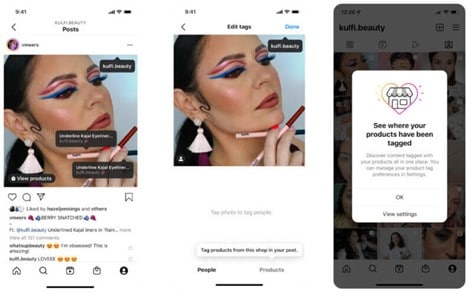
How to tag products?
After creating a post, users would tap the “Tag Products,” tap the product in the video or image, then search for the product from the shop to add a tag. Instagram users who see a product tag can tap it to buy the product within the app.
Control for brands and businesses
Whenever one of your products is tagged, Instagram will notify you on your profile. Want to turn off product tags? You can in your account settings. By default, it is set to “Allow all”.
Are you getting the best return out of your digital marketing?
Need an extra pair of eyes to review your online game plan? Let our experts take a look at your current state and do a comprehensive
digital marketing analysis at no cost to you. Please call us at
(800) 379-2829 or
contact us today and we will get to work right away.





Google recently said that the new algorithm update for Google search “is even more effective at identifying and nullifying link spam more broadly, across multiple languages.” Named the link spam update, it started from July 26th.
Also, Google posted this lengthy blog post named “A reminder on qualifying links and our link spam update.” The blog post is a reminder of the type of links that work against Google’s webmaster guidelines.
The Google blog post concluded by announcing the link spam update:
“In our continued efforts to improve the quality of the search results, we’re launching a new link spam-fighting change today — which we call the “link spam update.” This algorithm update, which will roll out across the next two weeks, is even more effective at identifying and nullifying link spam more broadly, across multiple languages. Sites taking part in link spam will see changes in Search as those links are re-assessed by our algorithms.”
Key Takeaways From The Link Spam Update
- The name of the update is Link Spam Update and not Link Spam Update July 2021.
- Google used the word “nullifying,” which does not necessarily mean “penalize,” but to ignore or not count spammy links.
- It is a global and multilingual update.
- Google did not post anything about how much this will impact the search results.
So if you notice a drop in your rankings over the coming weeks, it could be due to this update.
We did a deep analysis of our client’s websites to check if this update affected our rankings and we’re happy to say that there has been no major ranking drop as far as our clients are concerned. Our campaigns continue to enjoy stable rankings that we’ve achieved through ethical SEO methods. However, we will continue to keep an eye on the rankings as it is a global update and will inform you of any major changes in results.
Analyze your site?
Do you wish to know about the latest core update from Google? If yes, then this article is a must-read for you. Here, we will brief you about this update so you can make well-informed decisions about your website.
Quick facts about this update:
- On July 12th Google announced that the core update rollout was complete. Below is the official post:

- This update is not specific to any language, region, or website category.
- The main aim of any update is to provide better or improved search results. If you are a site owner, read this article related to Google’s core updates.
- Due to the pandemic, there is a significant shift in users’ search behavior. Google is striving hard to understand this behavior to show relevant results.
- A lot of websites are experiencing huge changes in their organic ranking positions.
- Various industries, such as Beauty & Fitness, Real Estate, Shopping, Health, Pets & Animals, & Travel & Tourism, saw the steepest increase in rank volatility.
- Industries such as Arts & Entertainment, Finance, Games, Sports, Jobs & Education, Food & Drink, and News industries saw the least dramatic increase in rank volatility.What you can do:
- Try fixing your site according to Google’s guidelines.
- Focus on quality content & include content that is helpful to users.
- Write your content with search engines and users in mind.
- Fix or avoid any SEO mistakes.
Read the guidelines and follow the above steps to tackle any changes that this update has brought to your site. If you need help, we’re just a call away!
See How You Can Improve Your SEO!
You must have received a ton of SEO advice from all kinds of sources. While some of them sound cool and trendy, they do absolutely nothing for your business. On the other hand, some SEO tactics actually do work, but they take a long time to deliver expected results. Hence, we bring to you 101 proven, actionable SEO tips that will get you results in real-time.
Basic SEO
- Videos are highly effective! Do not shy away from using and optimizing them.
- Make sure you pay close attention to user intent search queries when you are conducting keyword research.
- Work on building authority & trust. Start creating original content that clearly signifies your expertise and business goals.
- Create user-friendly content. Learn about the latest user trends and human behaviour before creating content.
- Get those customer reviews! Build a strategy wherein your customers can provide their reviews or feedback easily.
- It is best to bring in an SEO professional right from the beginning, so that the web design, especially the mobile version, is SEO-friendly.
- Strive to meet client expectations. Not being able to meet their expectations may cost your business its credibility.
- Using ‘exact match’ keywords isn’t necessary as Google is quite capable of associating topical keyword search terms.
- You may want to try personalizing your call to actions based on a referral, location, or keyword search query.
- Keep the domain name short. Make sure the one you choose contains less than 15 characters so that it’s easy to remember for the users.
- Remember to look for all variations of your site in the search engine. For example:
- http://xyz.com
- http://www.xyz.com
- https://xyz.com
- https://www.xyz.com
Mobile SEO
- Mobile-first is the way to go. With Google switching to mobile-first indexing, it is wise to check how the search engine ranks your mobile site using the Mobile-Friendly Test Tool in Google Search Console (GSC).
- See if AMP & PWA work for you. If you do not have a mobile site, your Accelerated Mobile Pages (AMP) or Progressive Web Apps (PWA) will be served up in the mobile-first index.
- Get rid of those pop-ups and interstitials as they can be annoying on a mobile site unless they serve as a warning for age restrictions or data privacy.
- Scroll tracking on Google AMP can be very useful and implemented easily through Google Tag Manager.
- Add forms to your AMP to attract leads.
- Consider investing in PWA. As PWAs are expected to replace 50% of consumer-facing apps, investing in them is highly recommended for B2C businesses.
- Boost your click-through rates with breadcrumbs. Creating a clear path to follow with the help of breadcrumbs will help you increase the click-through rate on your mobile site.
Technical SEO
- Migrate your site to HTTPS. While you do that, be sure not to make any additional changes, as Google may not acknowledge these changes.
- As search engines crawl even duplicate URLs, it is important to use canonical tags.
- Keep the loading speed down to 2-3 seconds. Use the Core Web Vital report along with your developer to figure out how you can improve your site loading speed.
- Aim for Google’s Top Stories Carousel. The best way to make it there is by creating AMP pages, publishing legitimate news, and submitting the site to Google News.
- Remember to Use rel=canonical tags. Any page that can be reached through different URLs should have the rel=canonical tag to avoid any confusion about duplicate content.
- Always remember to check whether your pages are indexed with ‘site:domain’ search and that none of them is double-indexed.
- Ensure that you do not use more than one H1 tag per page.
- Use Image Alt Attributes. As Google is now moving towards visual search, this is one important aspect you should not ignore.
- Creating separate sitemaps for sections like images, videos, blogs, etc. will help Google to focus its crawl.
- If your site has dynamic URLs, adjust the URL parameters in GSC.
- Remember to change all the internal links from HTTP to HTTPS before you migrate your site.
- In order to improve your user experience and SEO, always add breadcrumbs to your site.
- Avoid long redirects. By avoiding chain redirects you can help the search engines to crawl your website more quickly.
- Opt for Vector Format image files. Using vector files will allow you to have better image quality on different devices.
- Consider using a Content Delivery Network (CDN) to host your images as it helps to speed up your website considerably.
- Ensure that you optimize all your images for page speed and user-friendliness.
- When you have products with similar names and descriptions, it is better to create canonical tags instead of redirecting them.
- Opt for private hosting. While this will have no effect on your search rankings, sites having shared hosting get indexed less.
- Consider investing in visual search. Incorporating visual search in the marketing strategy can be highly effective for retailers and e-commerce businesses.
- Use Structured Data to improve ranking. While it isn’t easy for a site to get on the first page of the SERPs, using structured data can improve the chances significantly.
Link Building
- Make sure you use the disavow tool to get rid of those spammy links.
- Paid links can cost you! Google webmaster guidelines clearly state that the search engine is not in favor of paid links.
- Stay away from bad links. If Google comes across any risky link-building tactics, it could backfire big time.
- Stick to high-quality directories. Building links on high-quality directories will add relevance to your business.
- Build a clear linking structure. Plan your internal linking strategy carefully so that Google can navigate your site easily.
- Make sure your link profile is healthy. A healthy link profile helps to establish the overall quality and authority of your site.
- Focus on quality instead of quantity. Even with link building, authenticity is what matters most.
- Manual outreach can work wonders. Proactive link-building efforts allow you to control the quality of links.
- Create nofollow outbound links. In case you end up linking to a low-quality website, you can use them for external links.
- See to it that your internal links are logically placed. It is best to ensure that when you link internally, the content around the link is related to the keywords.
Content Optimization
- Don’t just focus on the keywords. Instead, create content based on important topics.
- Avoid creating thin content. As compared to thin content, long-form content can get you much better results in search rankings.
- It is important that you clean up all the scraped or duplicate content from your site.
- Revisit old content. See if any of your old content is still driving traffic and try creating new posts along similar lines with more relevant content.
- Add FAQ pages. Creating these pages will not only help your readers but also your site’s search rankings.
- Make the most of syndicated content. While you do this, ensure that the other sites place rel=canonical tags.
- Remember, content can be repurposed. It is recommended that you think of all the ways you can repurpose your content into videos, Slideshare, etc.
- Editing is a must! It is important to check all your content for errors so that nothing hampers your user experience.
- There are tools available for content ideas. Make the most of tools like BuzzSumo to get an idea about what kind of content ranks high.
- Old content may do more harm than good. Check on your old posts regularly to see if any of them is hurting your rankings.
- Do a cache check; see when a website’s pages were last cached. If it’s over a month, avoid the site.
- Try using a conversational tone when creating content. It may help your site rank for voice search queries.
- Instead of pasting the manufacturer’s content, take the time to write original product descriptions.
- Avoid keyword cannibalization. Instead of having multiple pages trying to rank for similar keywords, try combining their content to form one long-form content piece.
- Analyze your keywords. Conduct an analysis of your content to see if you can add to it and boost your page ranking.
- Try creating personalized UX. See if you can offer different pieces of content for new visitors and the returning ones.
Local SEO
- Create content focused on local facts and guides. It can help your business appear higher in search rankings.
- Take advantage of Trip Planning. Use this feature in Knowledge Graph to create local travel guides.
- Make use of the Local Inventory Ads program. It will allow your customers to browse the local store through Google.
- Try and find new, creative ways to encourage your customers to give reviews.
- Optimize for user location. You can do this by using the Google Ads distance and store visit reports.
- Optimizing for multiple locations is also very important. Make sure the NAP details are consistent for every location across all platforms.
- Add Regional Pages. If your business locations cover multiple states, regional pages are a must.
- Put up photos on your local pages. Photos of the local office give the business more credibility and make it more appealing to the local audience.
- Add ‘near me’ in your content! With the steady growth of voice search queries, optimizing for these searches has becomes all the more important.
Analytics & Tools
- Analyze your exit pages. Find out which pages the users are leaving most frequently and revise them.
- Don’t forget to add your IP address! It is important that you add your IP address to Google Analytics.
- Keep an eye out for a sudden drop in traffic. It may be due to an algorithm update or a manual action.
- Pay close attention to your competitors. Check whether their sites are ranking for the same keywords through new content.
- Try using Google Visits Conversions. If your business is eligible, you must definitely give Google Visit Conversions in Google Ads a try.
- When you first set up GSC, remember to add both the www & non-www versions of your site.
- Add your subdomains to GSC as new property so you can get all necessary data.
- Consider rewriting your meta descriptions. You may want to rewrite your meta descriptions if you see low click-through rates in your GSC Search Analytics report.
- Check out Google Analytics Segments. This particular feature allows you to gain more insight into your traffic data.
- Create custom dashboards in Google Analytics and Google Data Studio so the first thing you see when you log in is exactly what you need.
- Insights is as important as data. Before you try optimizing, gain insights into the latest trends and behaviour by using the content analytics tools.
- Answer those questions! See what questions are most commonly asked related to your keyword terms and provide the answers to them in your content.
- Add Bing Webmaster Tools to your toolkit. You will find that there are some useful tools that are not available in GSC.
Social Media SEO
- Go for Twitter Cards instead of Twitter URLs. Using Twitter Cards will allow you to make your URLs appear more clickable.
- Add Open Graph Markup. Using Facebook Open Graph Tags is one of the best ways to optimize your posts on the platform.
- Ensure your company profile on LinkedIn is complete. Complete company profiles get more views.
- Get active on Instagram. It’s high time that e-commerce businesses start taking Instagram seriously, especially now that it will allow you to buy directly from the app.
- Offer Customer Service on Facebook. This can prove to be one very powerful tool for your customer support staff.
- Try getting more conversions with LinkedIn Ads. Test and experiment to figure out what kind of sponsored content and ads can lead to more conversions.
- Try out Facebook Playlists. The addition of new features has made using Facebook Playlists easier.
- Shop the Look Ads can lead to more conversions. Give Pinterest’s Shop the Look Ads a go-to to convert more mobile searches.
- Realize the power of Reddit. Take all possible measures to ensure your brand appears on the 7th most visited website in the United States.
- Geotarget your Facebook Live Posts. This will help your local business target customers in specific locations.
- Never forget to sign a contract with the influencers. It is important to make it clear from the get-go what the business and the influencer will get from each other.
- Engage on social bookmarking platforms. Just as you engage on social media, engage on these platforms to earn links.
Final Takeaway
It is best to use the above tips and tricks to get your business in a good position before you launch your audit.
Are you getting the best return out of your digital marketing?
Need an extra pair of eyes to review your online game plan? Let our experts take a look at your current state and do a comprehensive digital marketing analysis at no cost to you. Please call us at (800) 379-2829 or contact us today and we will get to work right away.


From past few years, Google is consistently pushing the website owners to improve their mobile site experience. They have launched multiple algorithms, guidelines, and tools for the same purpose.
Recently, at Mobile World Congress, they launched two new tools, a new Mobile Scorecard and a Conversion Impact Calculator.
The mobile scorecard provides data on the chrome user experience so that you can compare the speed of multiple websites on mobile devices.
The mobile scorecard pulls data from chrome to compare the speed of multiple sites on mobile. That’s the same data that Google uses in the Page Speed Insights tool.
Google said that a site should load within 5 seconds on 3g connections and 3 seconds on 4G connection.

The impact calculator gives a rough idea of how much revenue a business is losing because of slow page load speed. It might seem a bit exaggerated but still useful.

Get both tools here and utilize it to the fullest. And if you are in need of mobile website design or redesign services, please don’t hesitate to connect with us.
FREE SPEED ANALYSIS OF YOUR WEBSITE

There are many factors that influence a sites ranking on voice search results. To figure out which factor is most important, Backlinko conducted an extensive analysis. Here are the findings:
- Page speed is crucial. Most of the results were from fast loading pages.
- Domain authority is of absolute importance.
- Content that ranks well on the desktop also ranks well on voice search.
- Surprisingly, Schema is not that important factor as only 36% of sites that ranked well on voice search results were using schema.
- 41% of Voice search results came from featured snippets.
- HTTPS is an absolute must.
This research debunked the myth that Schema is of absolute importance. And also made it clear that page speed is CRUCIAL. All the results that listed well on voice search were almost 2 times faster than traditional pages.
Google’s reliance on domains with high authority for providing voice search results comes from the tendency that they “may” provide higher accuracy as compared to domain’s with less authority. But it is possible that they will come up with a more sophisticated approach for the same in near future.
The research also shed some light on the importance of long-form content. People speak more words that they type, so it’s natural that pages that use comprehensive content will reign supreme in this area.
However, you don’t have to specifically optimize your site’s content for voice search, writing in-depth content will suffice the need.
On a side note, the virtual assistants are on the rise. So the marketers who are willing to offer their clients with latest digital marketing should take these platform seriously.

Google is struggling hard to keep the reviews trustworthy. They are trying to weed out fake reviews and bring genuine reviews, but they have a long journey ahead. As reported in Google My Business forums, recently, a Kentucky law firm allegedly ran a contest on Facebook, offering people zoo tickets in exchange for positive reviews.
This didn’t go down well with other law firms and businesses and they reported the incident to Google. As a result, Google updated their reviews guideline from:
“Don’t offer or accept money, products, or services to write reviews for a business or to write negative reviews about a competitor.”
to this:
“In addition to Prohibited Content guidelines, text reviews are subject to the following additional requirements:
- Don’t use reviews for advertising purposes. This includes, but is not limited to, posting email addresses, phone numbers, social media links or links to other websites in your reviews.
- Don’t include promotional or commercial content.
- Don’t offer or accept money in exchange for reviews.
- Don’t solicit reviews from customers in bulk.”
Reviews are important and it is almost as effective as a personal recommendation, but be careful how you collect it.
Free Business Reputation Report
To help you get more reviews for your business, we highly recommend our review widget. It’s a small piece of code which is placed on your website and helps you get positive reviews on Google, Yelp and Facebook. In addition, it helps to filter out negative reviews too thus ensuring positive experience to website users.
Need more details?
Please connect with us.


Vero, the new social media app is luring social media users.
What Is Vero?
Vero is a new entertaining app for the social media lovers who are fed-up from Twitter, Facebook, and Instagram and looking for something new. It has gained a lot of popularity and is nearing, three million registered users. The app allows the users to post and share movies, books, places, photos, links, etc.
What’s Unique About Vero?
The unique thing about the app is, it has no ads & no algorithm. It shows you post in chronological order. Vero aims to provide its users with an uninterrupted experience by making it advertising free. People around the globe are loving this simple approach to social networking.
Who Should Try The App?
You can try Vero, if you want to experience something new. Instagram, Facebook & Twitter use sophisticated algorithms to show you content, whereas, this app simply lets you view content in chronological order.
Initially, Vero announced that the app is free only for the first one million users. But, due to enormous boost in popularity, they decided to extend the “Free Offer”. But eventually, the company wants to charge a subscription fee. The company says, “We made our business model subscription based, making our users our customers, not advertisers.”
FREE SPEED ANALYSIS OF YOUR WEBSITE